Category Archives: Breads & Rolls

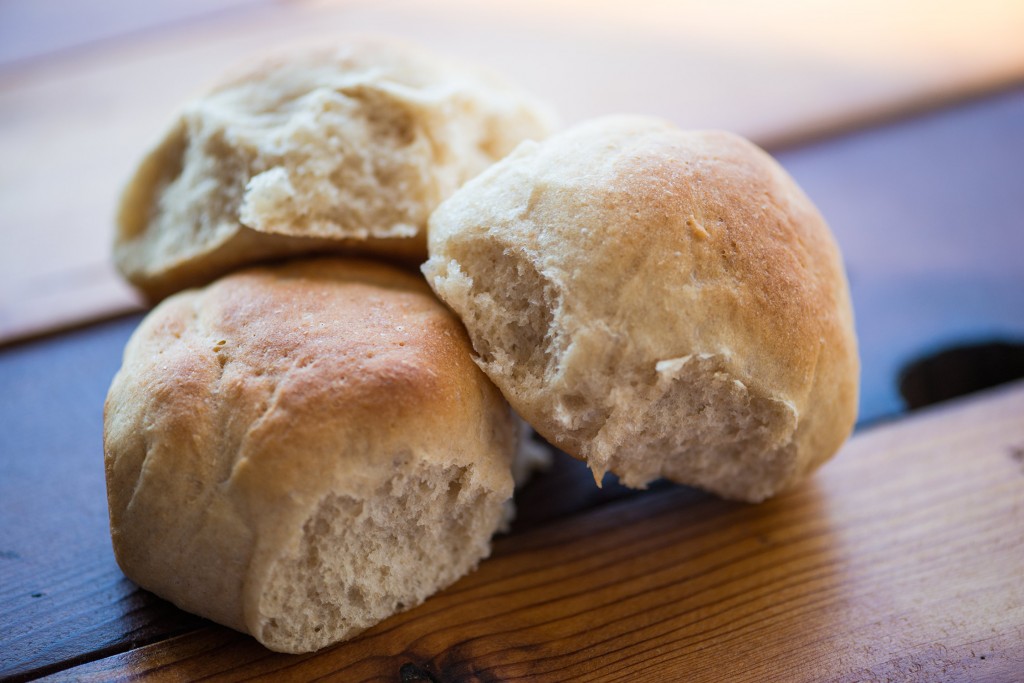
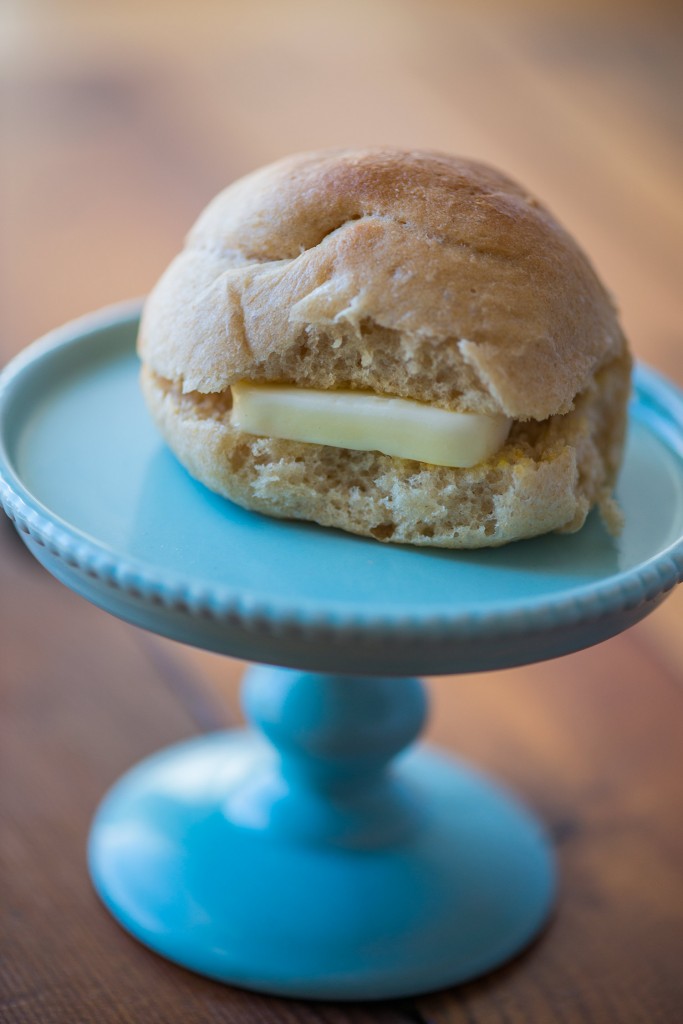
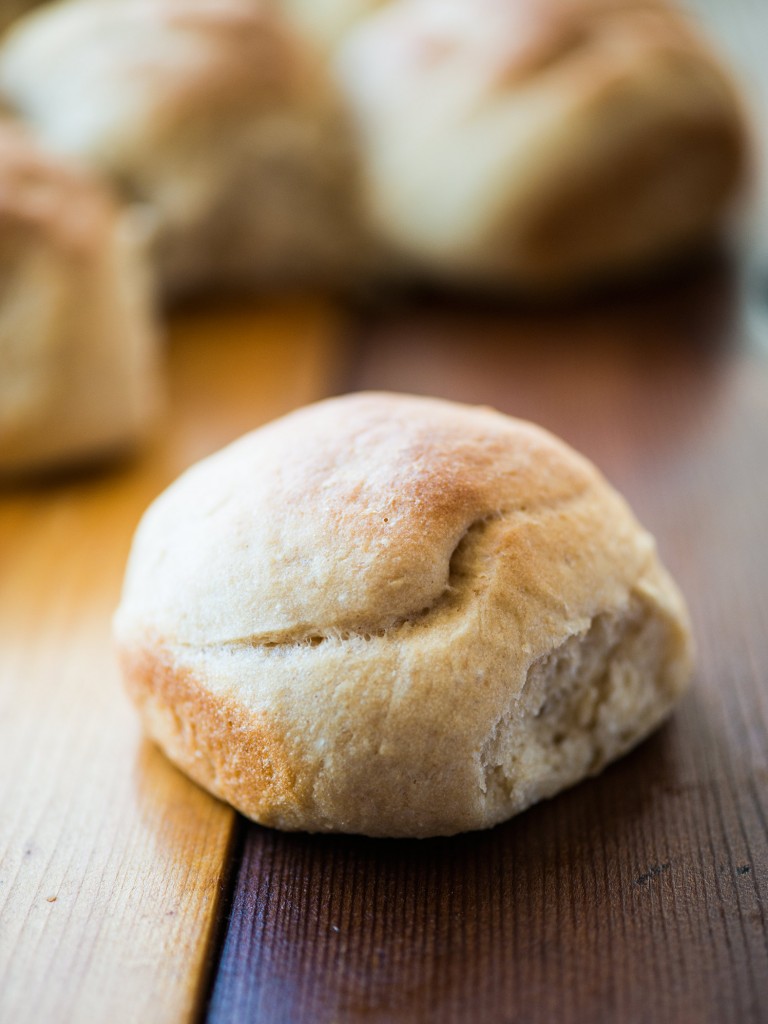
Honey Wheat Pull Apart Rolls

Honey Wheat Pull Apart Rolls | Anecdotes and Apple CoresOver the weekend, we watched a nephew and a cousin receive diplomas. We got back from Houston LATE on Monday night. The next morning, I flew to the hospital to capture the first few hours of a new baby’s life. Today, we’re visiting an old friend in Denver. On Saturday, Ryan and I are photographing a wedding. In other words: we’re busy.

And yet it’s early morning here, so the sky is still soft and everyone is sleeping except me. These moments of stillness are a much needed reprieve, and I find myself craving them more in recent weeks. Balancing motherhood with my creative work is a challenge, and on many days, I feel like there isn’t enough time to just sit and be. But when I do carve out the space for silence and contemplation, I find myself in a much more grounded place. I feel more connected to my inner life and to the pains and joys of those around me.

Honey Wheat Pull Apart Rolls | Anecdotes and Apple CoresI also crave bread. Sourdough with a thick slather of butter. These honey wheat pull-apart rolls straight from the oven. There are some meals that just don’t seem complete without a yeasty accompaniment. These honey pull apart rolls are easy to make, and they rise beautifully. The smell of sweet bread will fill your kitchen and home as they go from pale to golden brown in the oven. And then, you’ll have the pleasure of pulling one away from the rest of batch, breaking it open, and spreading butter or jam across its steaming surface. You won’t regret the time it took to make homemade bread. I promise.

Honey Wheat Pull Apart Rolls | Anecdotes and Apple CoresHoney Wheat Pull Apart Rolls

1 1/2 cups  Unbleached All-Purpose Flour
2 cups whole wheat flour
2 teaspoons instant yeast
2 tablespoons potato flour or 1/4 cup instant potato flakes
3 tablespoons Baker’s Special Dry Milk or nonfat dry milk
2 tablespoons honey
1 1/2 teaspoons salt
4 tablespoons soft butter
2/3 cup lukewarm water
1/2 cup lukewarm milk
2 tablespoons melted butter (for after baking)

Combine all of the dough ingredients in a large bowl, and mix and knead — using your hands, a stand mixer, or a bread machine set on the dough cycle — to make a soft, smooth dough. Place the dough in a lightly greased bowl. Cover the bowl, and allow the dough to rise for 60 to 90 minutes, until it’s just about doubled in bulk.

Gently deflate the dough, and transfer it to a lightly greased work surface. Divide the dough into 16 equal pieces. Round each piece into a smooth ball. Lightly grease two 8″ round cake pans. Space 8 buns in each pan. Cover the pans, and allow the buns to rise till they’re crowded against one another and quite puffy, about 60 to 90 minutes. Towards the end of the rising time, preheat the oven to 350°F.

Uncover the buns, and bake them for 22 to 24 minutes, until they’re golden brown on top and the edges of the center bun spring back lightly when you touch it. Remove the buns from the oven, and brush with the melted butter. After a couple of minutes, turn them out of the pan onto a cooling rack. Serve warm. Store leftovers well-wrapped, at room temperature.

Honey Wheat Soft Pretzels

Honey Wheat Soft Pretzels

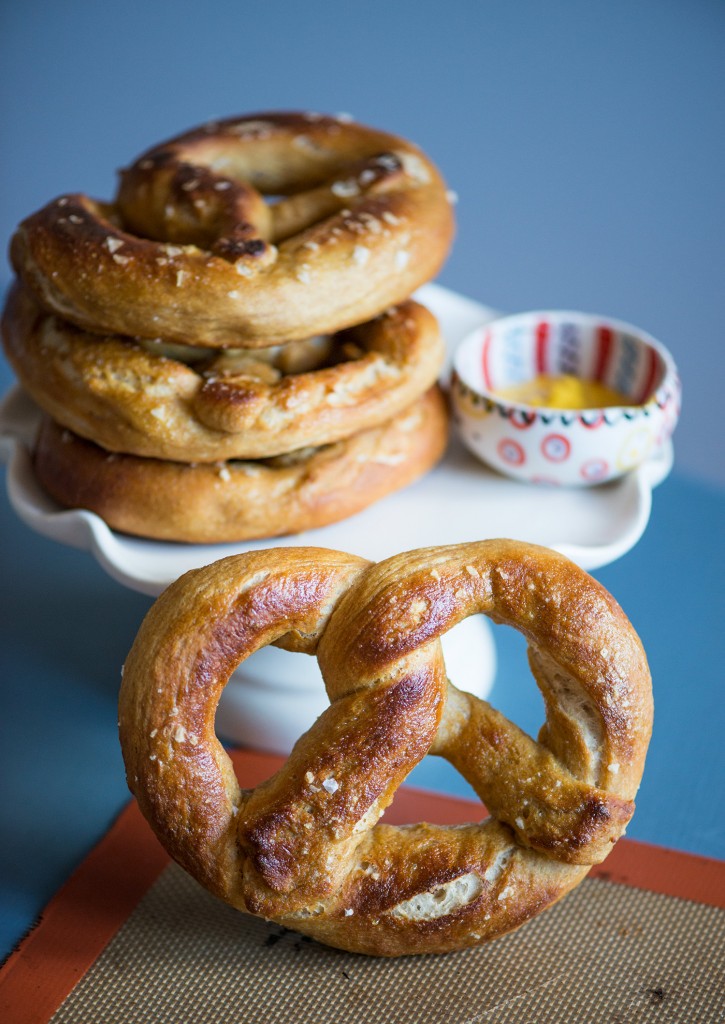
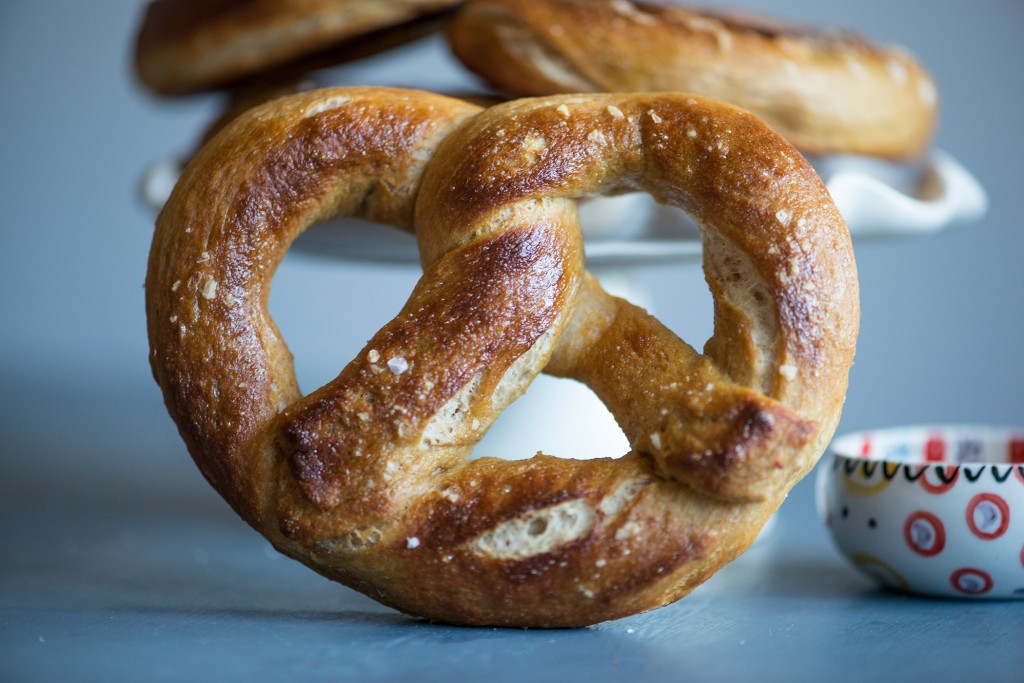
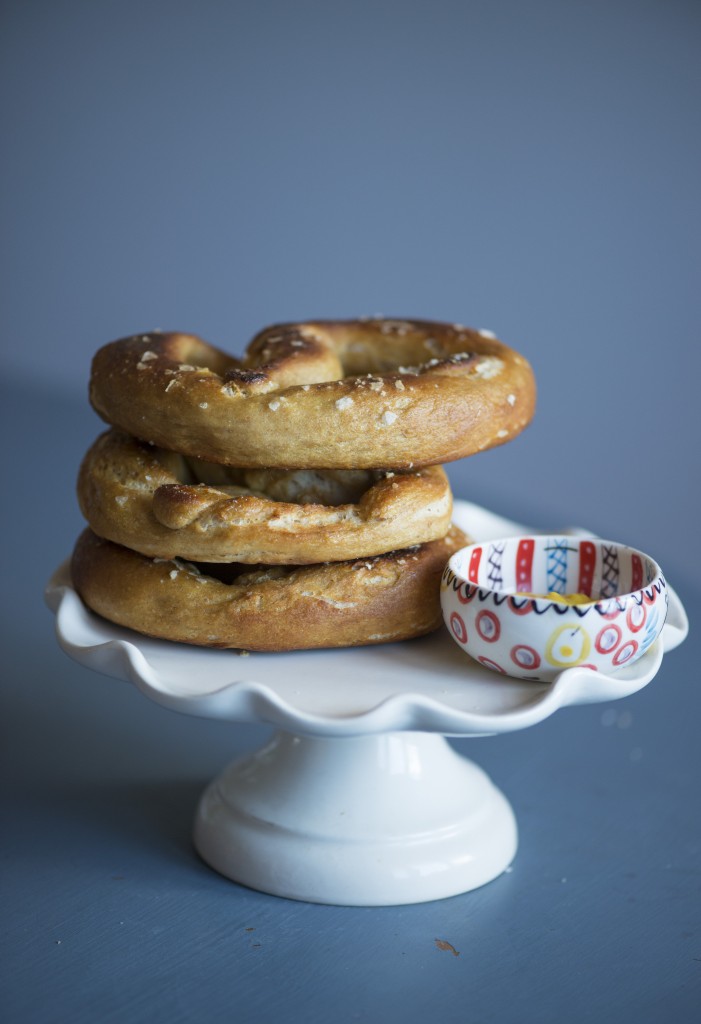
I can’t stand the crunchy kind. Ryan, however, loves them…and I’ve seen Lucy reach for those brown salty sticks. I would only eat a bag if someone paid me (and a good sum at that). But I have an entirely different relationship with soft pretzels. Warm, buttery, doughy. Twisted again and again to allow for the contrast of caramel exterior and white interior. Give me a hot soft pretzel, and I’m in heaven.

Honey Wheat Soft Pretzels

Ryan and I started making soft pretzels at home after a trip to see his family out east. The procedure can seem daunting at first. You have to boil your pretzels in a baking soda/water mixture if you want them to have that classic crust. But besides that added step, making soft pretzels isn’t difficult. In fact, I can’t think of a more relaxing way to spend a Saturday afternoon.

These soft pretzels are made with both whole wheat flour and honey. They’re slightly sweeter than what you might find on the streets of Philadelphia but they’re just as doughy and delicious. If not more.

Honey Wheat Soft Pretzels

Honey Wheat Soft Pretzels

*Adapted from Food Network
1 1/3 cups warm (110 to 115 degrees F) water
2 teaspoons kosher salt
1 package fast acting yeast
11 ounces all-purpose flour, approximately 2 1/4 cups
11 ounces whole wheat flour, approximately 2 1/4 cups
2 ounces unsalted butter, melted
1/4 cup honey
Vegetable oil, for pan
10 cups water
1/3 cup baking soda
1 large egg yolk beaten with 1 tablespoon water
Pretzel salt

Combine the water, salt, yeast, flour, butter and honey. Using the dough hook attachment, mix on low speed until well combined. Change to medium speed and knead until the dough is smooth and pulls away from the side of the bowl, approximately 4 to 5 minutes. Remove the dough from the bowl, clean the bowl and then oil it well with vegetable oil. Return the dough to the bowl, cover with plastic wrap and sit in a warm place for approximately 50 to 55 minutes or until the dough has doubled in size.

Preheat the oven to 450 degrees F. Line 2 half-sheet pans with parchment paper and lightly brush with the vegetable oil. Set aside.

Bring the 10 cups of water and the baking soda to a rolling boil in an 8-quart saucepan or roasting pan.

In the meantime, turn the dough out onto a slightly oiled work surface and divide into 8 equal pieces. Roll out each piece of dough into a 24-inch rope. Make a U-shape with the rope, holding the ends of the rope, cross them over each other and press onto the bottom of the U in order to form the shape of a pretzel. Place onto the parchment-lined half sheet pan.

Place the pretzels into the boiling water, 1 by 1, for 30 seconds. Remove them from the water using a large flat spatula. Return to the half sheet pan, brush the top of each pretzel with the beaten egg yolk and water mixture and sprinkle with the pretzel salt. Bake until dark golden brown in color, approximately 12 to 14 minutes. Transfer to a cooling rack for at least 5 minutes before serving.

Perfect Biscuits

Perfect Biscuits | Anecdotes and Apple Cores

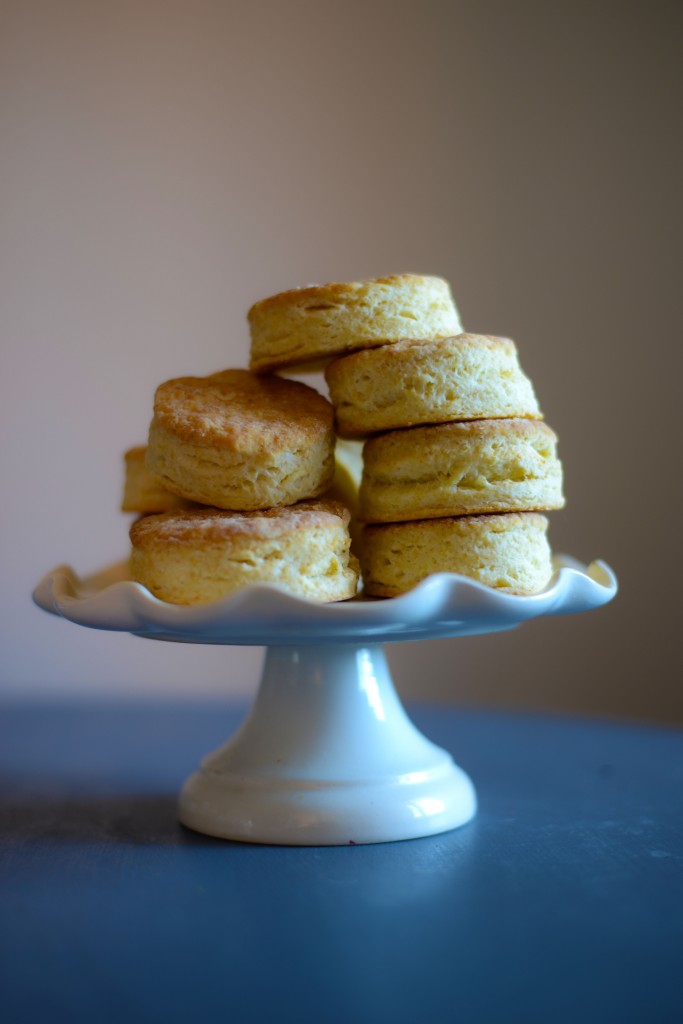
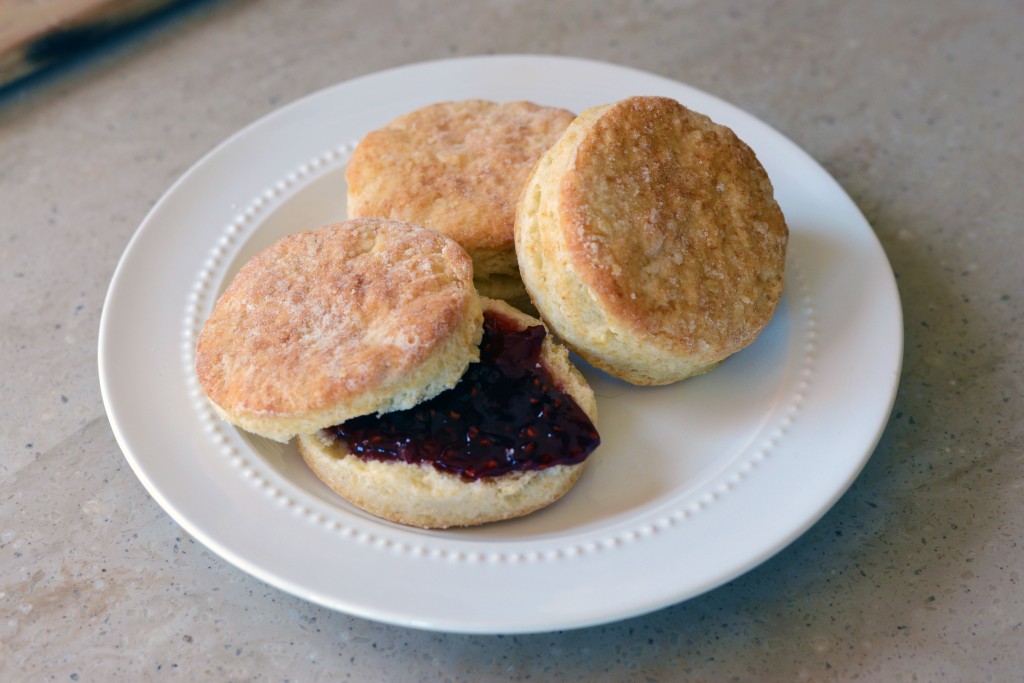
Despite spending my first decade in the south, I didn’t grow up eating biscuits. My husband, however, did. And so as we near our FIVE year wedding anniversary, I’m baking a few of his favorite eats. And even though I don’t have memories of my five-year-old self running down the stairs to slather butter and jam on biscuits just pulled from the oven, my twenty-seven-year-old-self now thinks that image is pretty close to heaven. In fact, I don’t think there’s much that a warm biscuit can’t fix. It certainly made the end of a very busy week a whole lot better.

Perfect Biscuits | Anecdotes and Apple Cores

Last night, after we finally put Lucy down to sleep, I made these: my perfect biscuits. One of my favorite bloggers, Marta, just returned from her adventures in Japan. If you haven’t visited her blog, What Should I Have For Breakfast Today. You should. When I saw a long-awaited post from her last night, I knew breakfast was in order. I’ve tried a lot of recipes over the years, but this Cooks Illustrated version produced the best results. Flaky, buttery, mile-high biscuits. Now….imagine these with butter, a spoonful of honey held over top. Or, perhaps, you like your biscuits with scrambled eggs and gravy. The good news is that one of these perfect biscuits, just enjoyed on its own, is out-of-this-world-amazing. My biscuit loving husband would know. So do what you like with them. You can’t go wrong.

Perfect Biscuits | Anecdotes and Apple Cores

Perfect Biscuits

2 1/2 cups (12 1/2 ounces) all-purpose flour, plus additions for work surface
1 tablespoon baking powder
1/2 teaspoon baking soda
1 teaspoon table salt
2 tablespoons vegetable shortening, cut into 1/2 inch chunks
8 tablespoons (1 stick) cold unsalted butter, lightly floured and cut into 1/8-inch slices, plus 2 tablespoons melted
1 1/4 cups cold low fat buttermilk

Adjust oven rack to lower-middle position; heat to 450-degrees. Whisk flour, baking powder, baking soda and salt in a large bowl.

Add shortening to flour mixture; break up chunks with fingers until only small, pea sized pieces remain. Working in batches, drop butter slices into flour mixture and toss to coat; pick up each slice of butter and press between floured finger tips into flat, nickel-sized pieces. (Meg note: the butter just wanted to break into little pieces when I pressed between my fingers. I found that placing the butter in the palm of one hand and using the heel of my other hand I pressed and smeared the butter into thin shards, then tossed them into the flour, gently mixing everything together with my fingertips.) Repeat until all butter incorporated; toss to combine. Freeze mixture in bowl until chilled, about 15 minutes.

Spray a 24-inch-square area of work surface with nonstick cooking spray; using a paper towel spread the spray evenly across the work surface. Sprinkle 1/3 cup of extra flour across sprayed area; gently spread flour across work surface with palm to form thin, even coating. Add all but 2 tablespoons of buttermilk to flour mixture; stir briskly with fork until ball forms and no dry bits of flour are visible. adding remaining buttermilk as needed (dough will be sticky and shaggy but should clear sides of bowl.) With rubber spatula, transfer dough onto center of prepared work surface, dust surface lightly with flour, and, with floured hands, bring dough together into cohesive ball.

Pat dough into approximate 10-inch square; roll into 18 by 14-inch rectangle about 1/40inch thick, dusting dough and rolling pin with flour as needed. Using a bench scraper or thin metal spatula, take the top edge of dough and fold it down until the edge reaches the middle of the rectangle. Fold the bottom edge upward until the edge meets the top edge, ultimately folding your dough into thirds. Brush any extra flour from surface. Now take the left edge of dough and fold in toward the center. Take the right edge and fold over to the other edge of dough, again folding into thirds. Your rectangle should approximately be 6 by 4-inches. Rotate dough 90-degrees, dusting work surface underneath with flour; roll and fold dough into thirds again, dusting with flour as needed.

Roll dough into 10-inch square about 1/2-inch thick; flip dough and cut nine 3-inch rounds with a floured biscuit cutter, dipping cutter back into flour after each cut. Carefully invert and transfer rounds to a baking sheet, spaced 1-inch apart. Gather dough scraps into ball; roll and fold once or twice until scraps form smooth dough. roll dough into 1/2-inch-thick round; cut three more 3-inch rounds and transfer to baking sheet. Discard extra dough.

Brush biscuits with melted butter. Bake without opening oven door, until tops are golden brown and crisp, 15 to 17 minutes. Let cool slightly then serve with butter and honey.

Freezer Directions: Place raw cut biscuits on a parchment lined baking sheet and place in freezer until hard. Store in zip-lock bag. When ready to bake, place frozen biscuits on a parchment lined baking sheet and bake for about 20 minutes or until golden brown.


Overnight Pizza Dough

Overnight Pizza Dough | Anecdotes and Apple Cores

I just finished lesson planning. Only a few more weeks of the semester, and I’m happy to report that despite the demands of new motherhood, teaching has been a success. My students, for the most part, seem to be learning…and I think a few of them actually like me. I enjoy getting away two nights each week, and I know that Ryan enjoys the one-on-one time he gets with Lu. And Ryan’s sweet mom joins them each Wednesday for dinner and play. It’s a win-win for everyone.
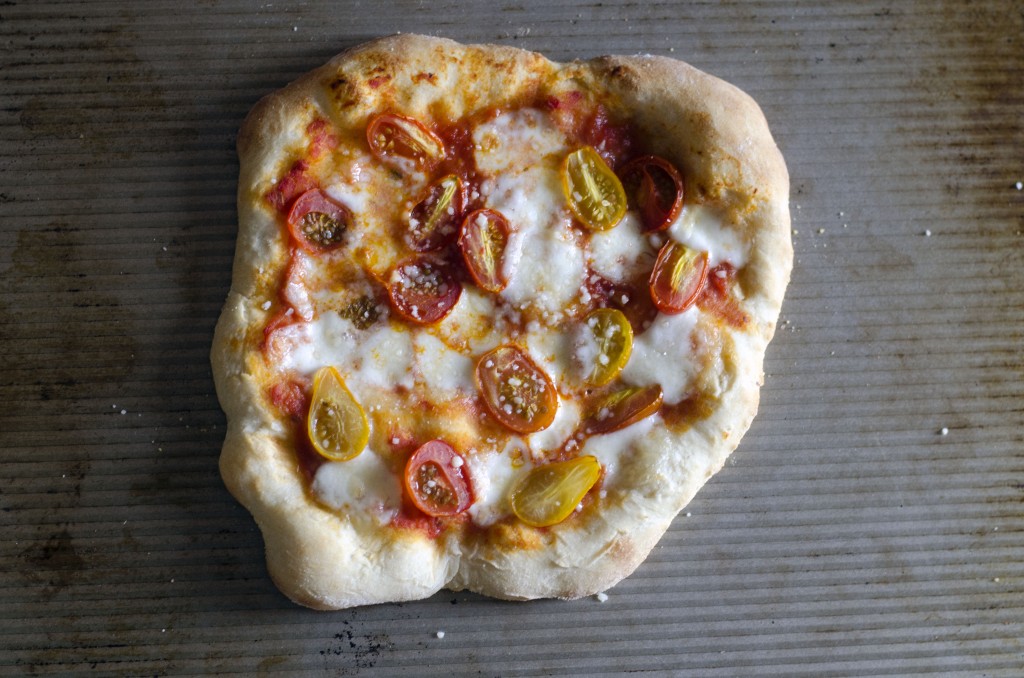
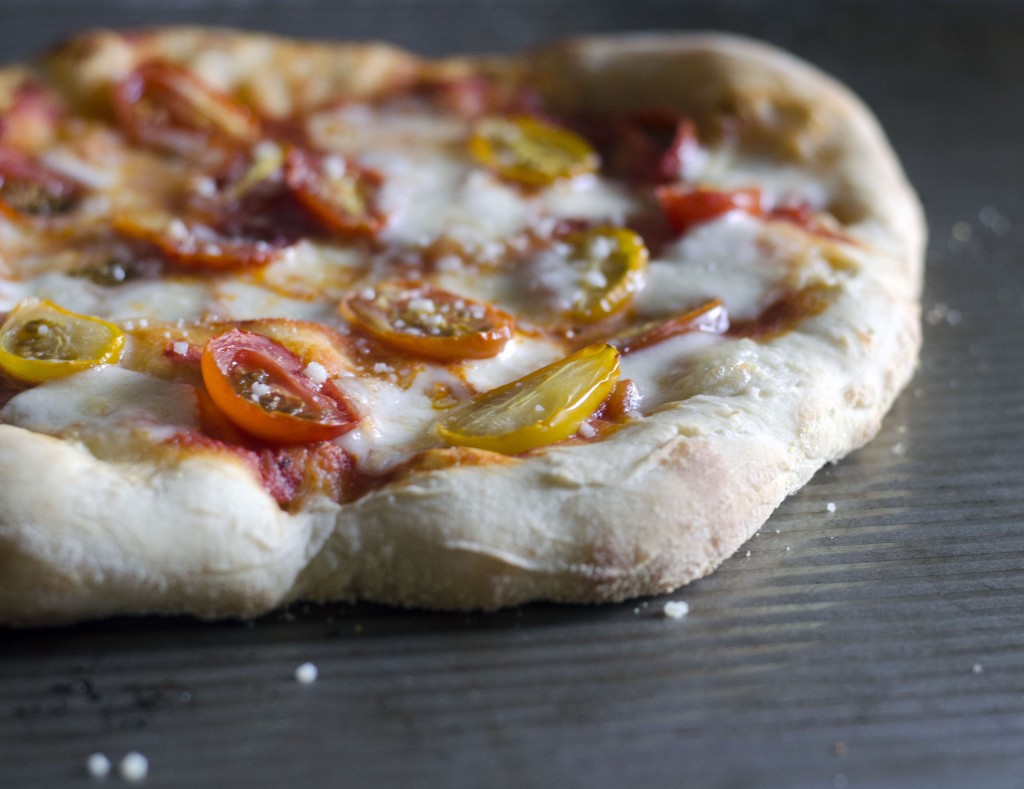
Overnight Pizza Dough | Anecdotes and Apple Cores

Last week, we made a huge batch of pizza dough on Monday night. This dough is surprisingly simple to pull together, and yet it wasn’t without its challenges. I left Ryan to the recipe while I nursed Lucy to sleep only to discover that he had failed to weigh his ingredients…a must when using any Peter Reinhart recipe (or so I thought). I admit I was a bit perturbed when I realized he’d “guessed” at 2 ounces of olive oil. “That simply won’t do!” I said/shouted. “We’re making another batch. The right way this time.”
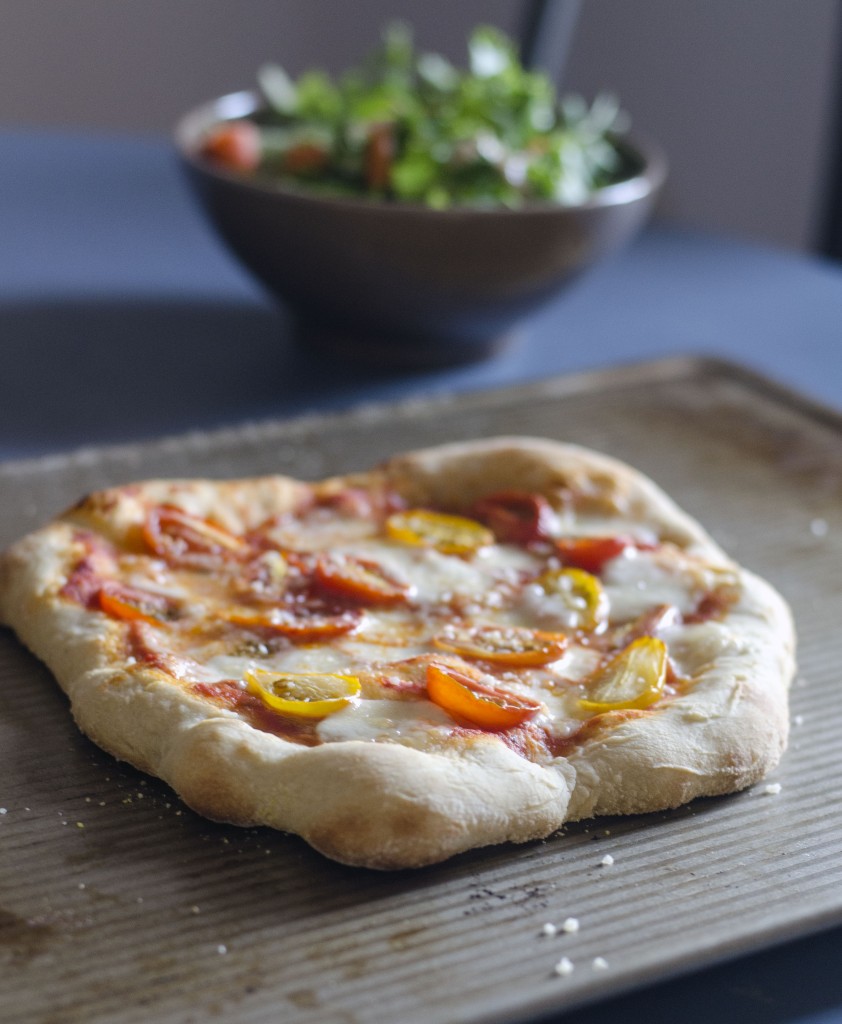
Overnight Pizza Dough | Anecdotes and Apple Cores

Ryan, being a wise man, didn’t fight me. He simply bagged up his dough and then sweetly made another batch with me watching him over his shoulder . “We’ll experiment with both batches tomorrow,” he said. And we did.

Much to my surprise (and Ryan’s delight) both varieties turned out wonderfully. My precisely measured dough was a bit wetter (which makes for a more elastic dough) while Ryan’s held up better under the weight of extra ingredients. You can’t go wrong. With or without a scale. And did I mention that this was Lucy’s first time eating pizza? Clearly, it was a win.

Overnight Pizza Dough | Anecdotes and Apple CoresOvernight Pizza Dough

4 1/2 cups (20.25 ounces) unbleached high-gluten, bread, or all-purpose flour, chilled
1 3/4 (.44 ounce) teaspoons salt
1 teaspoon (.11 ounce) instant yeast
1/4 cup (2 ounces) olive oil
1 3/4 cups (14 ounces) water, ice cold (40°F)
Semolina flour OR cornmeal for dusting

Stir together the flour, salt, and instant yeast in a 4-quart bowl (or in the bowl of an electric mixer). With a large metal spoon, stir in the oil and the cold water until the flour is all absorbed (or mix on low speed with the paddle attachment), If you are mixing by hand, repeatedly dip one of your hands or the metal spoon into cold water and use it, much like a dough hook, to work the dough vigorously into a smooth mass while rotating the bowl in a circular motion with the other hand. Reverse the circular motion a few times to develop the gluten further. Do this for 5 to 7 minutes, or until the dough is smooth and the ingredients are evenly distributed. If you are using an electric mixer, switch to the dough hook and mix on medium speed for 5 to 7 minutes, or as long as it takes to create a smooth, sticky dough. The dough should clear the sides of the bowl but stick to the bottom of the bowl. If the dough is too wet and doesn’t come off the sides of the bowl, sprinkle in some more flour just until it clears the sides. If it clears the bottom of the bowl, dribble in a tea- spoon or two of cold water. The finished dough will be springy, elastic, and sticky, not just tacky, and register 50 to 55F.

Sprinkle flour on the counter and transfer the dough to the counter. Prepare a sheet pan by lining it with baking parchment and misting the parchment with spray oil (or lightly oil the parchment). Using a metal dough scraper, cut the dough into 6 equal pieces (or larger if you are comfortable shaping large pizzas), You can dip the scraper into the water between cuts to keep the dough from sticking to it, Sprinkle flour over the dough. Make sure your hands are dry and then flour them. Lift each piece and gently round it into a ball. If the dough sticks to your hands, dip your hands into the flour again. Transfer the dough balls to the sheet pan, Mist the dough generously with spray oil and slip the pan into a food-grade plastic bag.

Put the pan into the refrigerator overnight to rest the dough, or keep for up to 3 days. (Note: If you want to save some of the dough for future baking, you can store the dough balls in a zippered freezer bag. Dip each dough ball into a bowl that has a few tablespoons of oil in it, rolling the dough in the oil, and then put each ball into a separate bag. You can place the bags into the freezer for up to 3 months. Transfer them to the refrigerator the day before you plan to make pizza.)

On the day you plan to make the pizza, remove the desired number of dough balls from the refrigerator 2 hours before making the pizza. Before letting the dough rest at room temperature for 2 hours, dust the counter with flour, and then mist the counter with spray oil. Place the dough balls on top of the floured counter and sprinkle them with flour; dust your hands with flour. Gently press the dough into flat disks about 1/2 inch thick and 5 inches in diameter. Sprinkle the dough with flour, mist it again with spray oil, and cover the dough loosely with plastic wrap or a food-grade plastic bag. Now let rest for 2 hours.

At least 45 minutes before making the pizza, place a baking stone either on the floor of the oven (for gas ovens), or on a rack in the lower third of the oven. Heat the oven as hot as possible, up to 800F (most home ovens will go only to 500 to 550F, but some will go higher). If you do not have a baking stone, you can use the back of a sheet pan, but do not preheat the pan.

Generously dust a peel or the back of a sheet pan with semolina flour or cornmeal. Make the pizzas one at a time. Dip your hands, including the backs of your hands and knuckles, in flour and lift I piece of dough by getting under it with a pastry scraper. Very gently lay the dough across your fists and carefully stretch it by bouncing the dough in a circular motion on your hands, carefully giving it a little stretch with each bounce. If it begins to stick to your hands, lay it down on the floured counter and reflour your hands, then continue shaping it. Once the dough has expanded outward, move to a full toss as shown on page 208. If you have trouble tossing the dough, or if the dough keeps springing back, let it rest for 5 to 20 minutes so the gluten can relax, and try again. You can also resort to using a rolling pin, though this isn’t as effective as the toss method.

When the dough is stretched out to your satisfaction (about 9 to 12 inches in diameter for a 6-ounce piece of dough), lay it on the peel or pan, making sure there is enough semolina flour or cornmeal to allow it to slide. Lightly top it with sauce and then with your other top- pings, remembering that the best pizzas are topped with a less-is-more philosophy. The American “kitchen sink” approach is counterproductive, as it makes the crust more difficult to bake. A few, usually no more than 3 or 4 toppings, including sauce and cheese is sufficient.

Slide the topped pizza onto the stone (or bake directly on the sheet pan) and close the door. Wait 2 minutes, then take a peek. If it needs to be rotated 180 degrees for even baking, do so. The pizza should take about 5 to 8 minutes to bake. If the top gets done before the bottom, you will need to move the stone to a lower self before the next round. if the bottom crisps before the cheese caramelizes, then you will need to raise the stone for subsequent bakes.

Remove the pizza from the oven and transfer to a cutting board. Wait 3 to 5 minutes before slicing and serving, to allow the cheese to set slightly.

Makes six 6-ounce pizza crusts.

from The Bread Baker’s Apprentice by Peter Reinhart

Whole Wheat Naan

Whole Wheat Naan | Anecdotes and Apple Cores

Better late than never, right? I have certain Type A tendencies…and sticking to a religious blog schedule is one of them. I post on Monday and Thursday mornings, and I make that happen come rain or shine. BUT, I am realizing that babies throw all types of schedules by the way side. Lucy got sick last week…and I’m still trying to catch up. Papers to grade, photographs to edit, kitchens to clean…the list goes on and on.

However, Ryan and I had an amazing weekend in Boulder with Lucy. Yes, Boulder. We ended up cancelling our trip to Austin due to Lucy’s virus. We were terribly disappointed, but we knew that traveling with a sick baby would have been a bad idea (for us, for Lucy, and for all the passengers on board). Thankfully, she rebounded from the virus and was acting like her normal self by Thursday, so we decided to take advantage of a beautiful Colorado weekend and make a short trip to Boulder.

Whole Wheat Naan | Anecdotes and Apple Cores

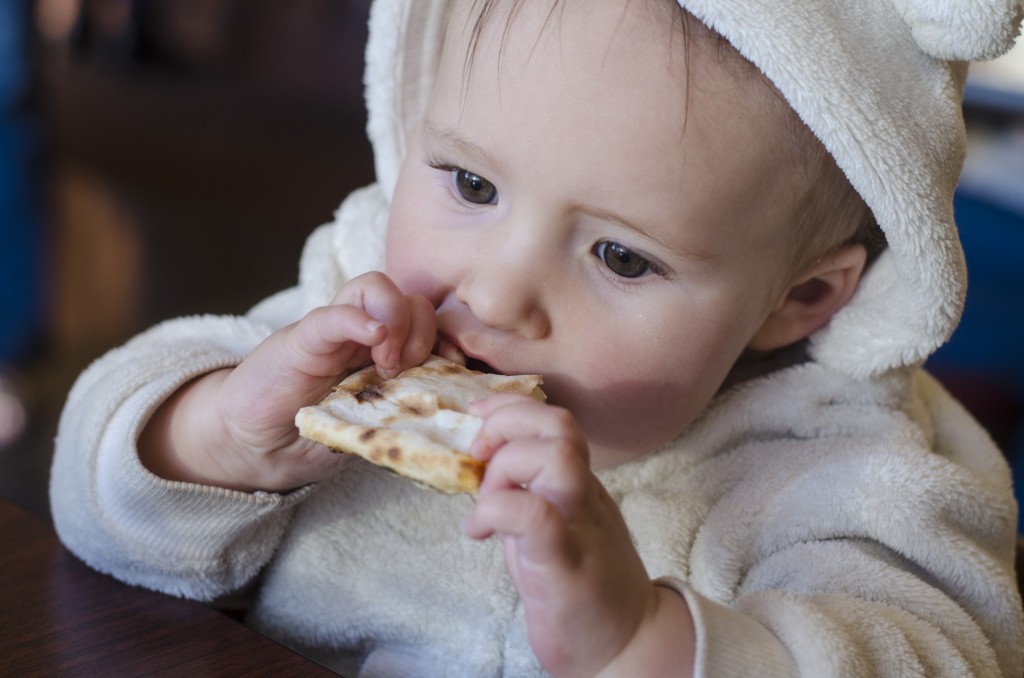
While there, we ate well. VERY well. But perhaps the highlight of our culinary experiences came on Friday night, at a little strip mall restaurant called Curry-n-Kebob. Lucy had naan for the first time (which she loved) and Ryan and I stuffed ourselves silly with Indian curries and jasmine rice.

Whole Wheat Naan | Anecdotes and Apple Cores

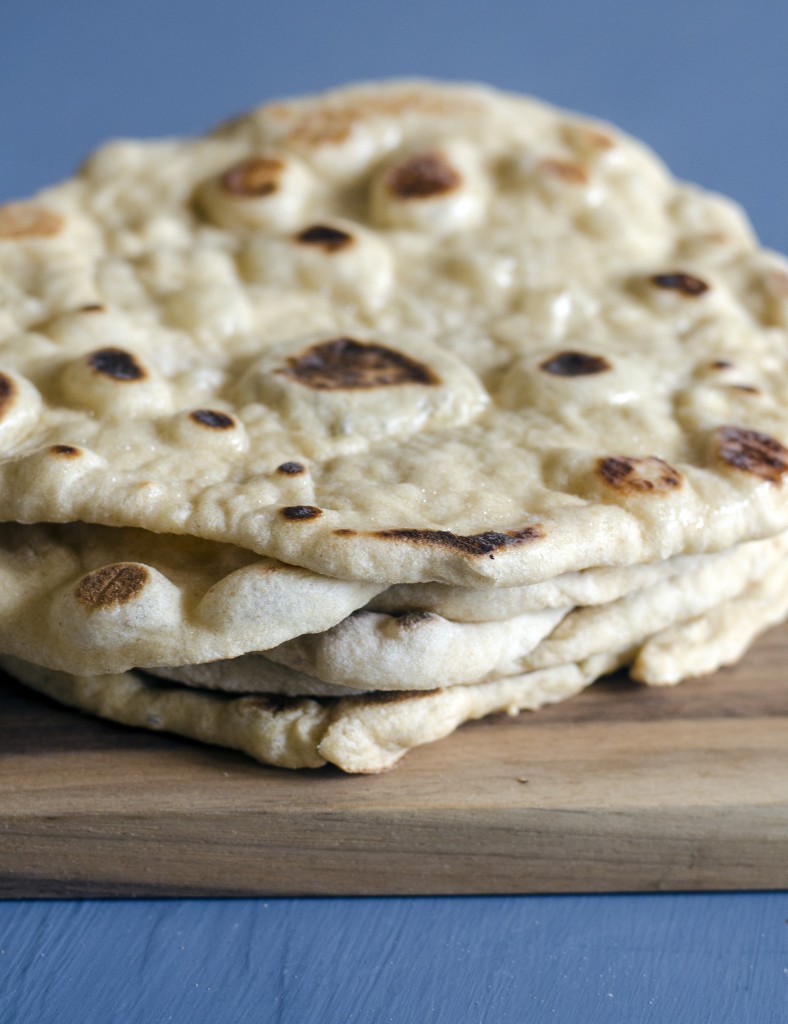
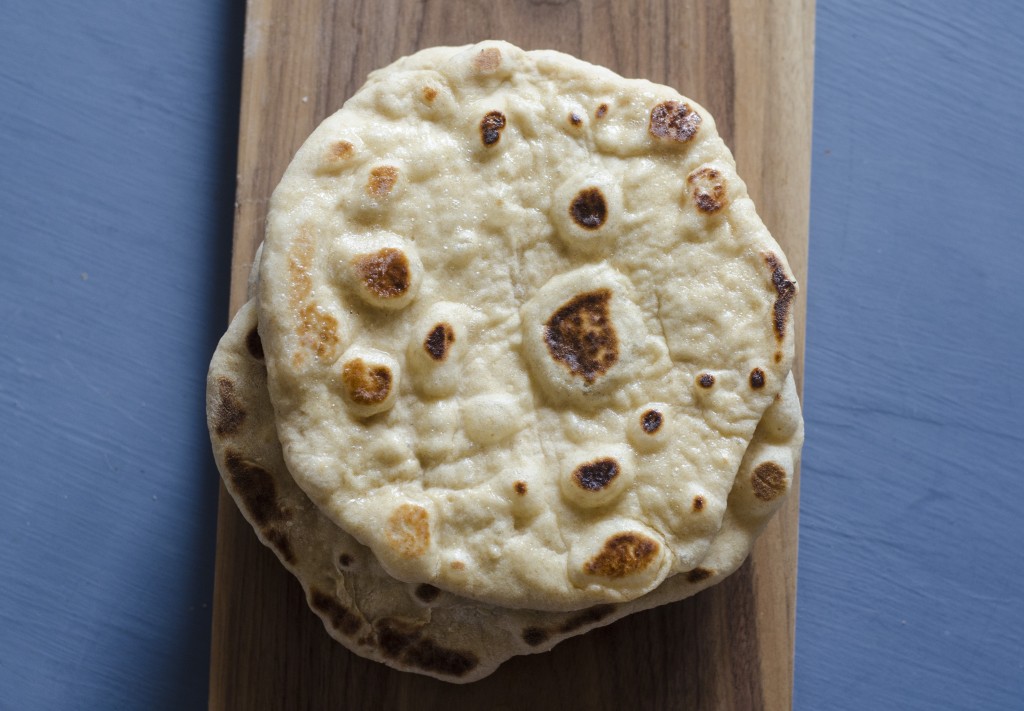
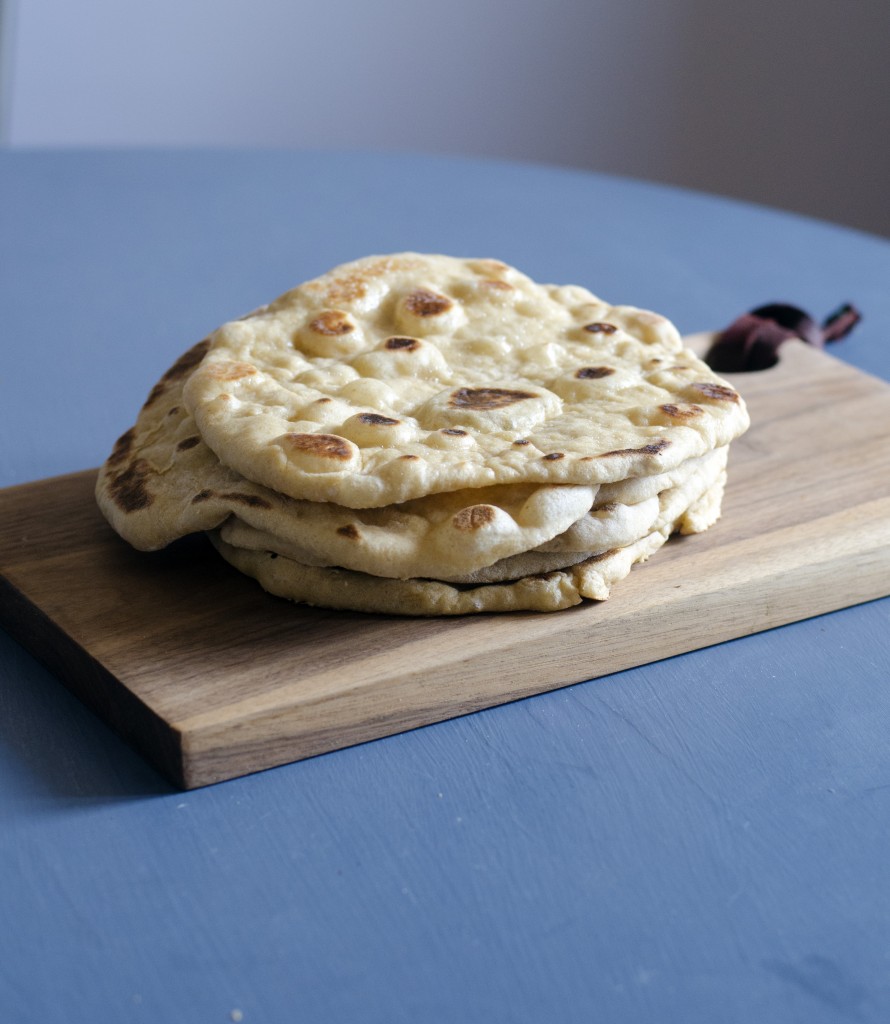
Unfortunately, we don’t have an Indian restaurant that even begins to compare with Curry-n-Kebob here in the Springs, so I’ve made it my mission to recreate as many Indian dishes as I can at home. I started today with this naan bread. A freshly cooked piece of naan is better than most any dessert, in my book. Soft and buttery, I could eat a whole batch on its own. I made these naan with a combination of bread and whole wheat flour, and I was pleasantly surprised at how soft and light the loaves stayed. If you love naan and feel like you can’t make it at home, TRY THIS RECIPE. You’d be surprised at how easily it comes together. Naan is by far one of the easiest yeast recipes I’ve made.

Whole Wheat Naan | Anecdotes and Apple Cores

Whole Wheat Naan

3/4 cup water

1 teaspoon active dry yeast

2 teaspoons sugar, divided

1 cup whole wheat flour

1 cup bread flour

1/8 teaspoon baking powder

1 teaspoon salt

3 tablespoons whole milk yogurt

2 tablespoons olive oil

1/4 cup melted butter (optional)

In a small bowl, whisk together warm water (100 degrees Fahrenheit), yeast, and one teaspoon sugar. Allow to sit until frothy, about ten minutes.

Meanwhile, whisk together flours, salt, and baking powder. Then, whisk yogurt and olive oil into yeast mixture. Gently stir wet ingredients into dry ingredients until a wet dough begins to form. Do not overmix. The dough should come together in a sticky ball. Cover bowl with plastic wrap or a damp kitchen towel. Allow to sit and rise at room temperature for 2-3 hours.

Sprinkle flour over dough and form into six balls (adding more flour if necessary). On a clean surface, roll each ball of dough into a round about 8 inches wide and 1/4 inch thick.

Warm a large cast-iron skillet over medium heat until almost smoking. Gently lay one piece of dough in center of skillet. Allow to cook for one minute. The dough should begin to bubble. Flip and continue to cook for an additional minute. Then, cover your skillet and allow to cook for an additional 30-45 seconds. Remove from skillet and brush with melted butter (optional). Repeat with remaining pieces of dough.