Category Archives: Breads & Rolls

Pumpkin Maple Cinnamon Rolls

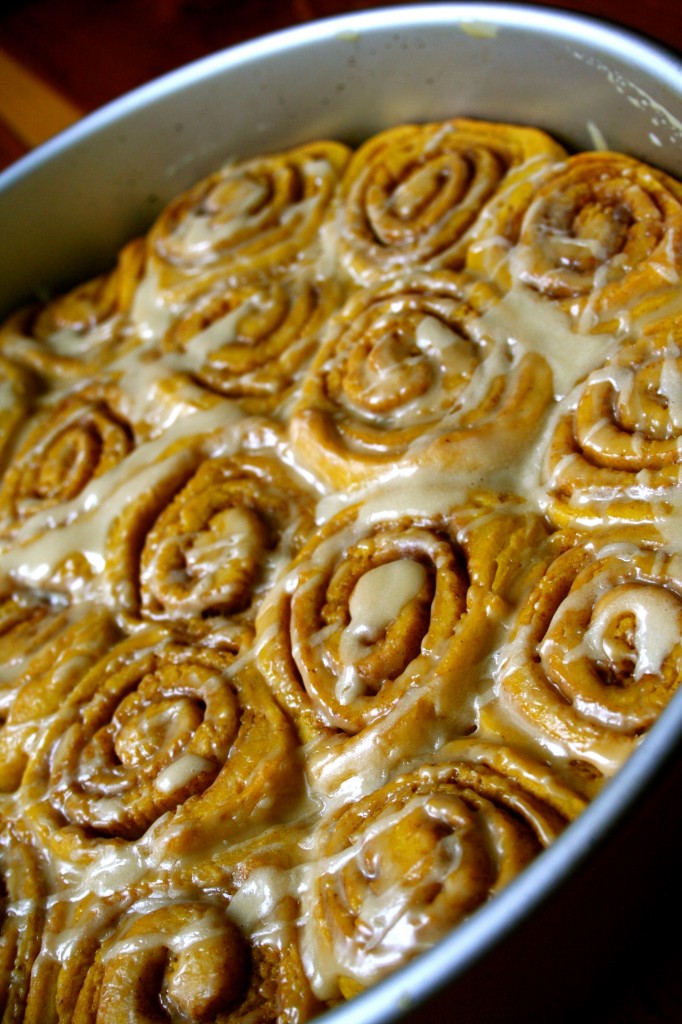
I had one of those days yesterday. Printer ran out of paper, then once restocked, it ran out of ink. Margot ran down the street, then peed on the carpet as soon as I took her upstairs. I felt sick to my stomach in the morning, and then my throat grew sore when I arrived on campus. UGH. But despite all this, I still made cinnamon rolls. And pumpkin cinnamon rolls at that. With a maple syrup glaze. Yes, I have interesting ways of coping with stress.

I baked these pumpkin cinnamon rolls for my fiction workshop (we potluck it, each Tuesday night), but then feared I might be doing more harm than good by passing out these rolls (and my germs) to the class. I tried to warn my colleagues, but they didn’t seem to care. The rolls were passed and most were devoured within the first fifteen minutes of our three hour class.
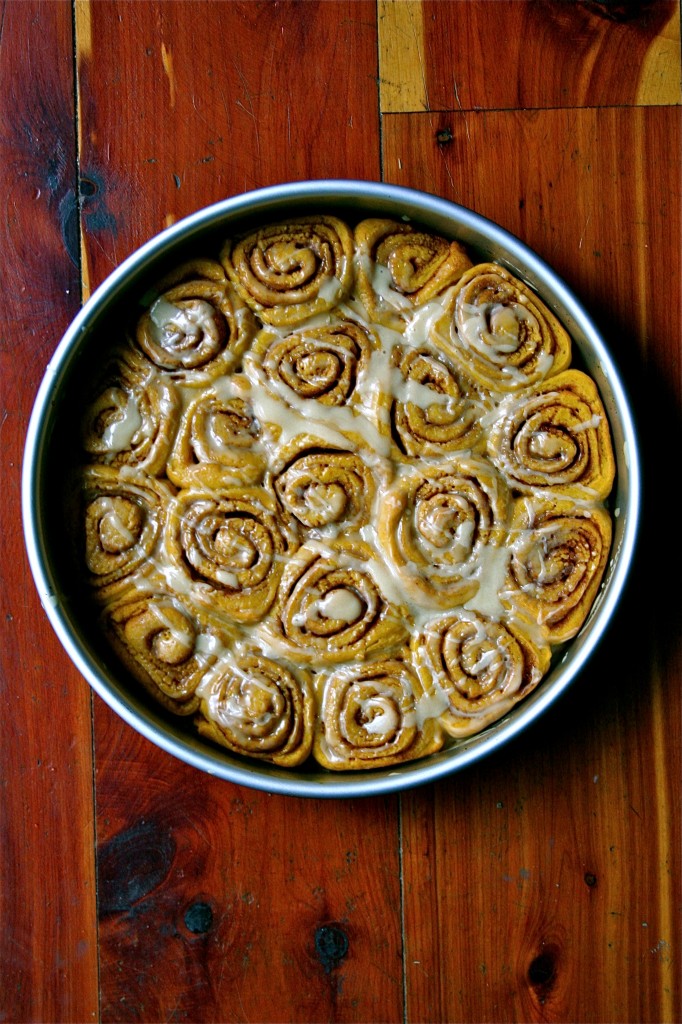
I typed most of this blog post during our one break last night, eagerly wanting to get home to watch the debates, make a cup of spearmint tea, and eat one or two more of these fall-inspired rolls. Because after the day I had yesterday, I felt like I deserved at least two cinnamon rolls.

I’m baking for a wedding this weekend, which means that my kitchen counters will soon be covered in cake pans, cardboard rounds, bowls for frostings, fillings, and other edible adornments. The days leading up to a wedding are a frenzy of activity, so I’m happy that I was able to sneak in one more recipe before the cake baking commences. I found this recipe on Smitten Kitchen, and it went off without a hitch. A great recipe to keep on file as fall holidays approach.
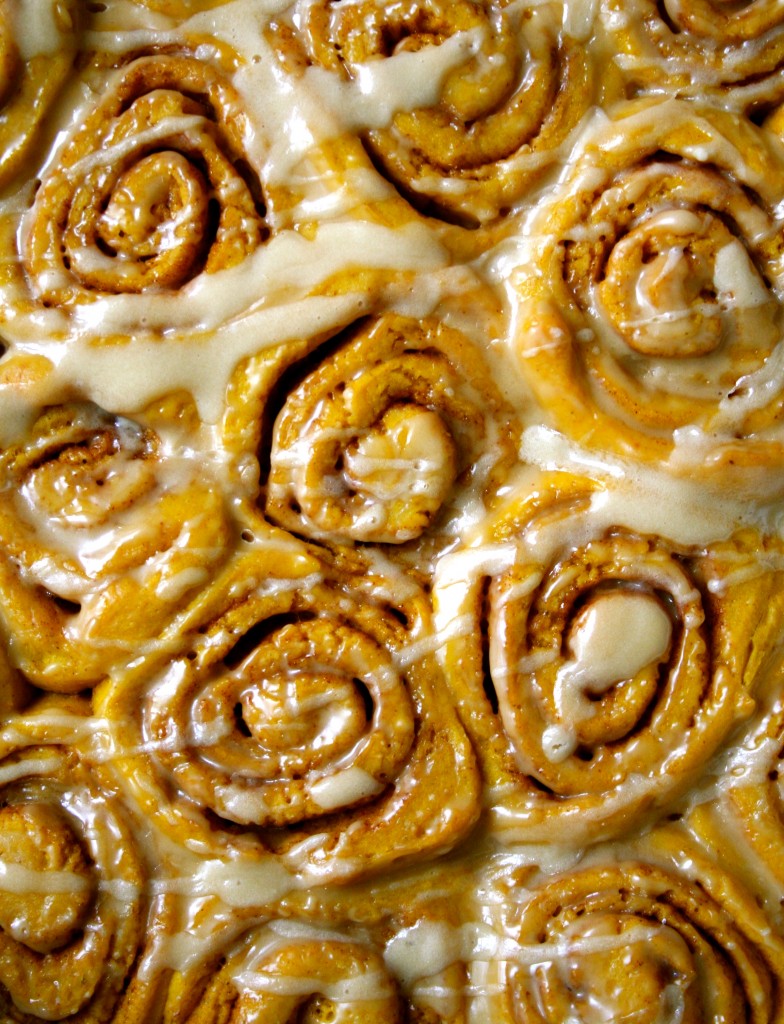
Pumpkin Maple Cinnamon Rolls

*From the always enviable Smitten Kitchen

Dough
6 tablespoons unsalted butter, to be divided
1/2 cup whole milk, warmed (but not over 116 degrees)
2 1/4 teaspoons active dry yeast (from 1 .25-ounce or 7 gram envelope yeast)
3 1/2 cups all-purpose flour, plus extra for rolling out
1/4 cup (packed) light or dark brown sugar
1/4 cup granulated sugar
1 teaspoon table salt
1/2 teaspoon ground cinnamon
1/4 teaspoon freshly grated nutmeg
1/8 teaspoon ground cardamom (optional)
1/4 teaspoon ground ginger
2/3 cups pumpkin puree
1 large egg
Oil for coating rising bowl

Filling
3/4 cup light or dark brown sugar
1/4 cup granulated sugar
1/8 teaspoon table salt
2 teaspoons ground cinnamon

Glaze
2 TBSP maple syrup
2 TBSP whole milk or heavy cream
2 cups powdered sugar, sifted
Few drops vanilla extract (optional)

1. Melt butter in saucepan. Set aside to cool slightly. Combine your warmed milk and yeast in a small bowl and set aside. After five to seven minutes, it should be a bit foamy. If it’s not, you might have some bad yeast and should start again with a newer packet.

2. In the bottom of the bowl of an electric mixer combine flour, sugars, salt and spices. Add just 1/4 cup ( leave the rest for assembly) of your melted and stir to combine. Add yeast-milk mixture, pumpkin and egg and mix combined. Switch mixer to a dough hook and run it for 5 minutes on low.

3. Scrape mixture into a large oiled bowl and cover with plastic wrap. Set aside for 1 hour in a draft-free place; it should just about double.

4. While it is rising, line the bottom of two 9-inch round cake pans with parchment paper and butter the sides of the pan and the paper.

5. Scoop dough onto a very well floured surface and flour the top of it well. With a rolling pin, roll the dough to an approximately 16×11-inch rectangle. Brush reserved melted/browned butter over dough. Stir together remaining filling ingredients and sprinkle mixture evenly over dough. Starting on a longer side, roll the dough into a tight spiral.

6. With a sharp serrated knife, using absolutely no pressure whatsoever (only the weight of the blade should land on the dough) gently saw your log with a back-forth motion into approximately 1-inch sections. When a soft dough like this is rolled, it tends to grow longer, which means that you’ll have the option to either make more buns (say, 18 instead of 16) or just cut them a little larger (in generous inches).

7. Divide buns between two prepared pans. You can sprinkle any sugar that fell off onto the counter over them. Cover each pan with plastic wrap and let rise for another 45 minutes. If you’re doing this ahead of time, you can now put them in the fridge overnight. In the morning, leave them out for an hour to warm up and finish rising.

8. 15 minutes before you’re ready to bake them, heat the oven to 350°F. Meanwhile, you can make the glaze. Beat your cream cheese until it is light and fluffy. Add powdered sugar and vanilla. Drizzle in milk until you get the consistency you’re looking for, either thick enough to ice or thin enough to drizzle.

9. Remove the plastic and bake buns for 25 minutes, until puffed and golden. Transfer pans to wire cooling racks and drizzle/schmear with maple syrup glaze.
Monet

Anecdotes and Apple Cores

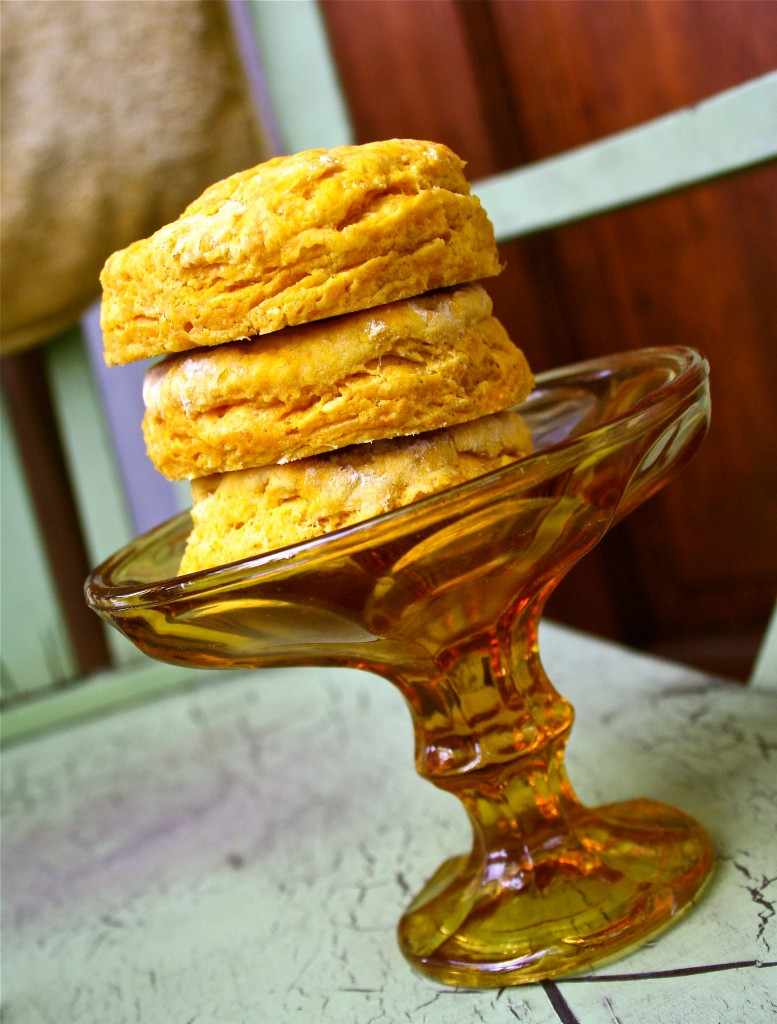
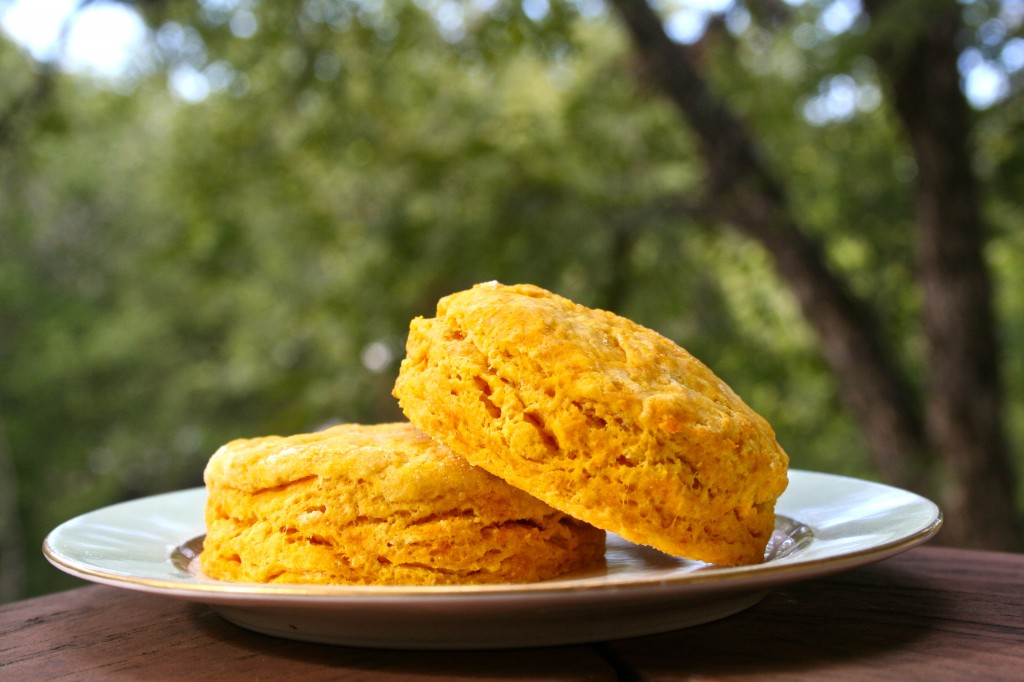
Pumpkin Biscuits

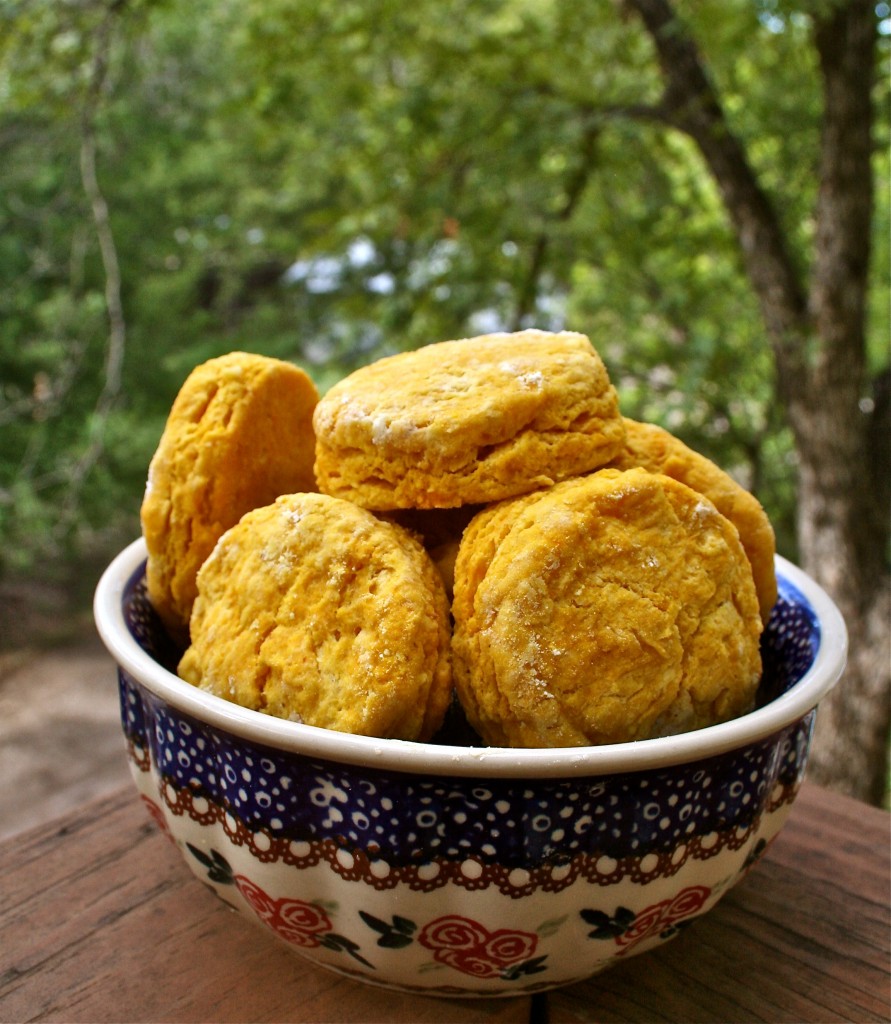
We had rain and wind this last weekend in September. Today marks the beginning of October, a month that brims with all the excitement of fall and the holidays without any of the compulsion to buy and stress. And, with the with the opportunity to dress up in costumes waiting at the finish line, October seems like the perfect month.

My parents kept many pictures of Noelle, Pam, Susanne, and I around our home. Pictures of us wearing matching dresses. Pictures of us skiing down mountains. Pictures of us in Italy or at the beach or in our backyard. But one of my favorite pictures rests near my mother’s kitchen sink. Noelle and I stand staggered in our front yard, pine trees stretching high. I’m wearing a gold leotard with a white tulle skirt. Noelle wears a a cotton shaft with a few well-placed adornments that somehow scream “princess.” We hold matching wicker baskets.

Easily, you can identify that we were about to embark on that quintessential childhood activity: trick or treating. But whenever I looked at that picture, I saw two girls in a dark forest, illuminating the night with their presence. And by presence I mean: strength and beauty. Why it is so easy to own that presence at the age of 6 and 2, but then so difficult to hold onto it as you grow into adults says much about our culture and society.

But thankfully, Noelle and I grew up with reminders (the picture) and those that reminded (my parents, older sisters, and friends). We’ve had our share of doubts, but I think we’ve both become women who hold onto that presence.

And what else do we do? We eat good food. Because we learned, along the way, that nourishing our bodies is one of the greatest gifts we can give to our souls.

Pumpkin Biscuits

1 3/4 cups all-purpose flour, plus more for kneading and shaping
2 1/2 teaspoons baking powder
1 teaspoon salt
1/2 teaspoon baking soda
6 tablespoons unsalted butter, frozen, plus more to spread
3/4 cup pumpkin puree, chilled
1/3 cup buttermilk
2 tablespoons honey

1. Preheat oven to 400 degrees F with rack in the lower third of the oven.

2. In a large bowl, whisk together flour, baking powder, salt, and baking soda. Using a box grater, grate the frozen butter into the flour mixture. With a pastry blender or a metal fork, cut in butter until mixture resembles small peas.

3. In a liquid measuring bowl, whisk together pumpkin, buttermilk, and honey. Using a large wooden spoon or a rubber spatula, fold into flour mixture until combined (do not overmix).

4. Turn out dough onto a lightly floured surface. Shape dough into round and pat to an even 1-inch thickness. With a 2-inch biscuit cutter dipped in flour, cut out biscuits. Gather together scraps, and repeat (do not repeat more than once as this greatly effects the biscuit’s height and flakiness).

Monet

Anecdotes and Apple Cores

Croissants

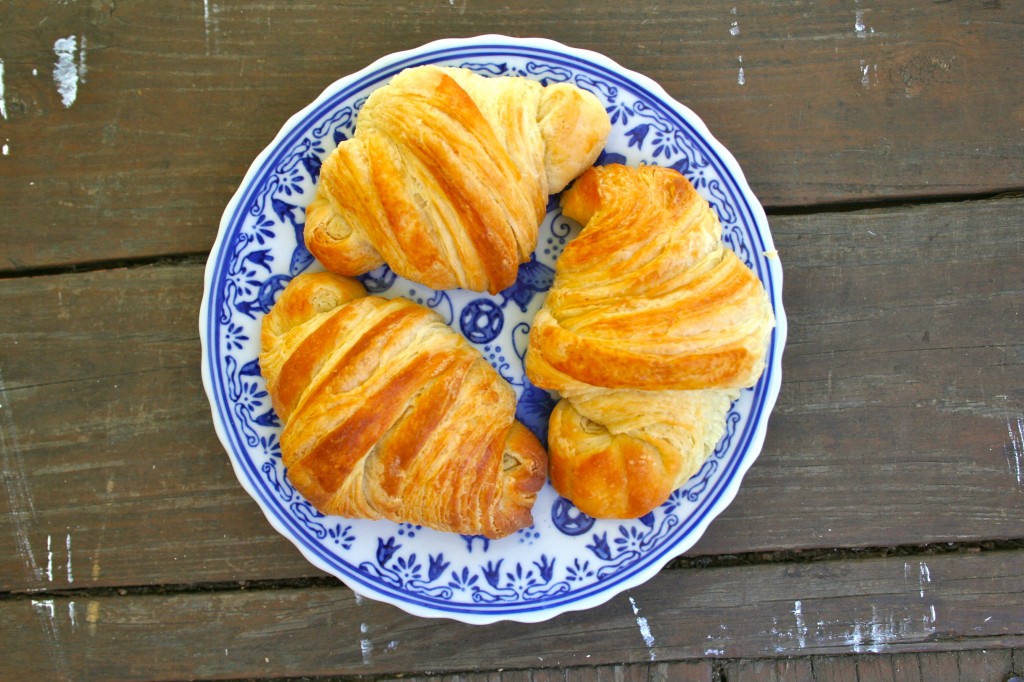
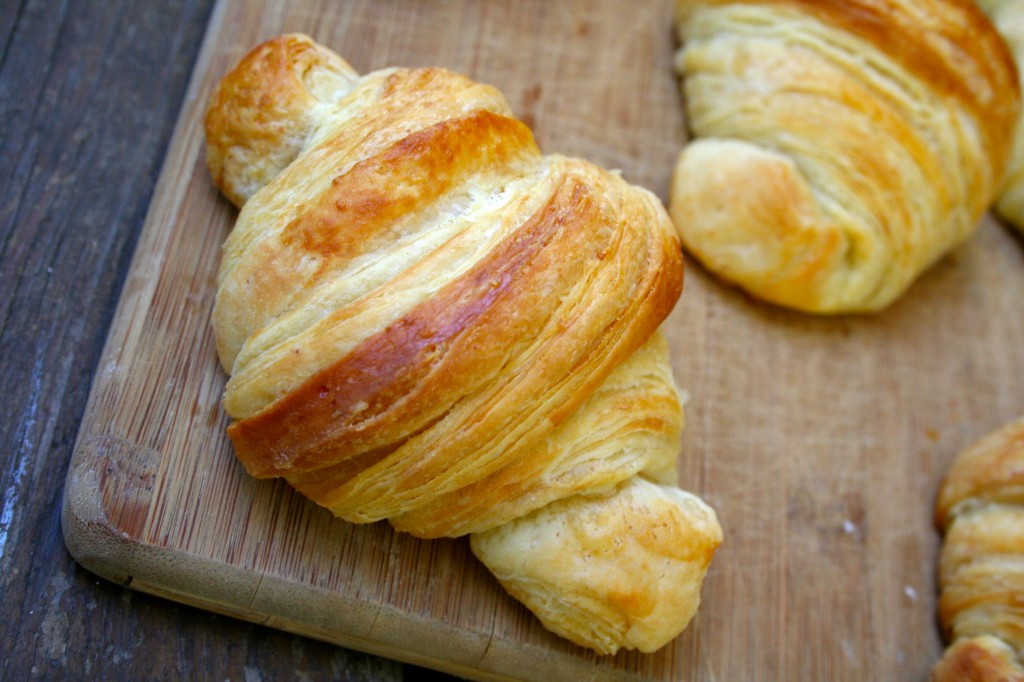
Since going to Paris in May, I’ve developed an undying affection for the most ubiquitous french pastry–the croissant. Waking up each morning in Paris, I’d look forward to my mid-day snack: a freshly baked croissant with hundreds of delicate and buttery layers. We found what I argue is the very best croissant in Paris. Good news: we enjoyed dozens of them. Bad news: I am now hundreds, no thousands of miles away.

What is there to love about a croissant? It begins and ends with butter.

So if you want the very best croissant, you need to splurge on pasture butter. Pasture butter is made from cows grazing on fresh spring pastures. If you can’t access pasture butter, pick up a pound of organic. Because if you are going to invest the time and energy (croissants require much of both) then you might as well make the best croissants in your city, right?

I’ve tried several croissant recipes over the years. Some have left me with croissants swimming in pools of burning butter (bad news, my friends) while others have produced buttery but not flaky pieces of bread. Sadly, I had nearly given up my croissant-baking quest and settled on store-bought.

But then, I found croissant recipe gold.

I should have learned this lesson a long time ago: ALWAYS trust Peter Reinhart. He’s the god of bread. And a benevolent one, at that.

This is what I love about his recipe:

1. A slow fermentation of the detrempe.

2. No pounding of the butter block (my neighbor, husband, and cat should be singing Peter’s praises)

3. Allowance for smaller sized croissants (because you do consume about 8 tablespoons of butter when you eat a huge one)

Quite simply, these are some of the best croissants I’ve ever had (and I can now say that Ryan and I have enjoyed some VERY good croissants). I didn’t ask Peter’s permission to print his recipe so I’d advise you to do one of two things: buy his book (Artisan Bread Everyday) or visit this blog (she asked and received permission to print the recipe).

I brought a basket of croissants to my graduate class on Tuesday night, and we enjoyed them with a jar of strawberry jam. And then, Ryan and I enjoyed a few leftovers the following morning. I didn’t feel like I was in Paris (it is far too hot in Austin for my imagination), but I did feel a bit closer. And that, my friends, is worth all the time in the world.

 Monet

Anecdotes and Apple Cores


Walnut Crusted French Toast

Wet and soggy. With a touch of mold. You can tell I wasn’t made to live in the northwest. Here we are in Austin, with 24 hours of rain, and I’m already eager to wring out my clothes.

But no. Not really. I am actually quite thankful for the way the rain hit my windows as I closed my eyes last night. The soft pattering a constant presence as I dove in and out of sleep. And wet weather does make for better writing. I sat with a cup of coffee and wrote for a few hours this morning. Both me and my thesis director were pleased.

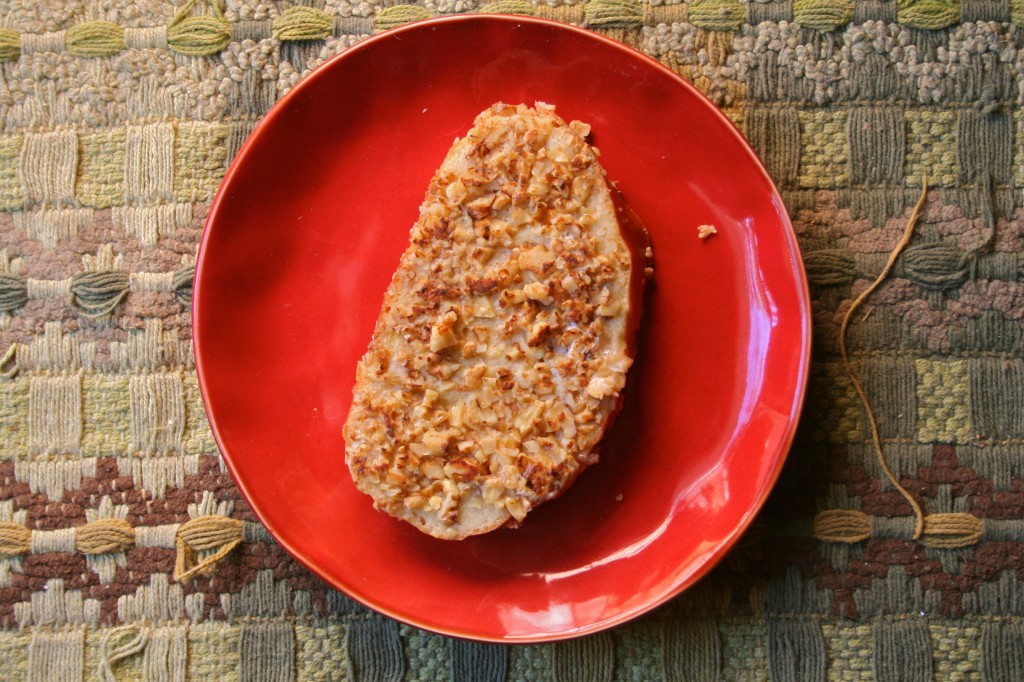
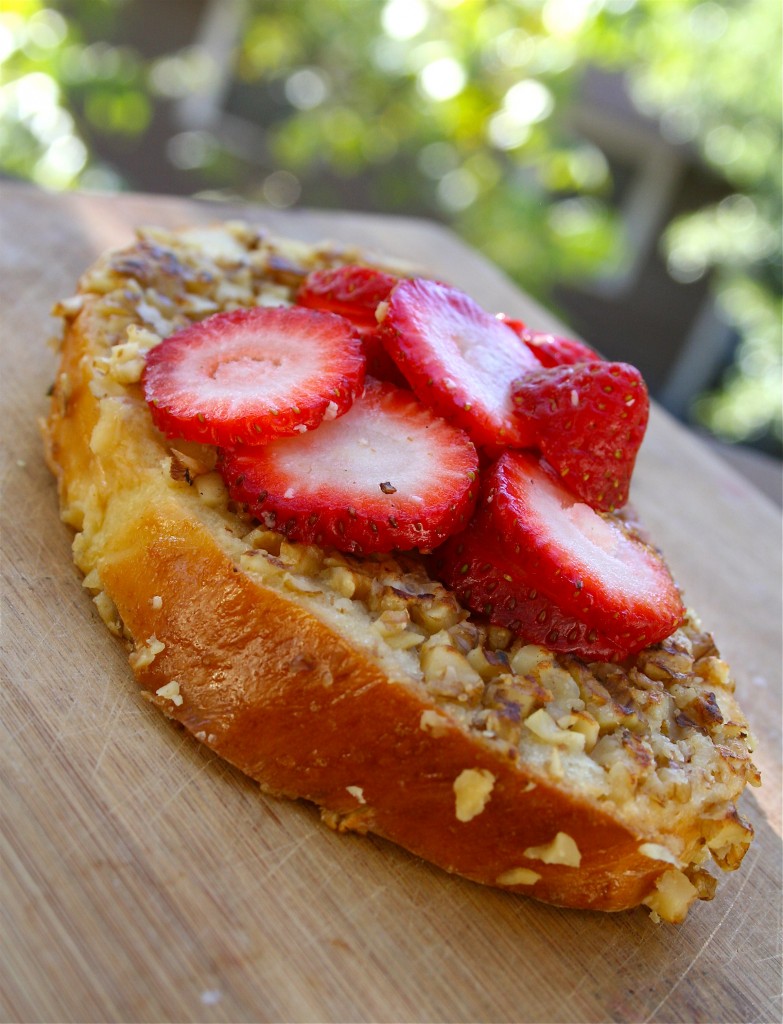
Earlier this week, I received a bag of walnuts from California (I’m fairly certain the southern part) and I happily chopped nuts on Monday afternoon and stretched my culinary imagination. With a few attempts behind me, I landed on this recipe: Walnut Crusted French Toast. Because doesn’t it sound lovely to crust a thick piece of bread with slightly toasted nuts?

If you’re like me, french toast is a weekend breakfast staple. Fresh berries, chopped nuts, and a drizzle of maple syrup can turn a boring piece of bread (forgive me, ubiquitous white loaf) into something worth sharing with friends.

But I took my weekend tradition a step further by dipping  bread into both the classic egg/milk mixture and a bowl of crushed walnuts. As I placed the nutty bread on a skillet sizzling with butter, the aroma of eggs and toasting nuts made me very grateful to be alive.

So…I just had to share this before we took off for the weekend. Because don’t we all want to make french toast tomorrow morning?

Walnut Crusted French Toast

1 cup of walnuts, very finely chopped
1 cup half-and-half
3 large eggs
2 tablespoons honey
1/4 teaspoon salt
8 (1/2-inch) slices day-old or stale country loaf, brioche or challah bread
4 tablespoons butter

1. In medium size mixing bowl, whisk together the half-and-half, eggs, honey, and salt. Pour custard mixture into a pie pan or wide, shallow bowl and set aside. Place chopped walnuts in another similar size pan.

2. Dip bread slice into custard mixture, allowing to soak for 30 seconds on each side, and then dip each side into walnut mixture. Remove to a cooling rack that is sitting in a sheet pan, and allow to sit for 1 to 2 minutes.

3. Over medium-low heat, melt 1 tablespoon of butter in a large saute pan. Place 2 slices of bread at a time into the pan and cook until golden brown, approximately 2 to 3 minutes per side. Repeat with all 8 slices. Serve immediately with maple syrup, whipped cream or fruit.

Monet

Anecdotes and Apple Cores

Cinnamon Twist Bread

Over the weekend, I spoiled myself. Not only did my childhood friend come to visit–with her beautiful 8-month pregnant belly–but I drank two frothy cappachinos.

Normally, I take my coffee black. Or with the most meager splash of almond milk.  But after a hard week, whole milk with two shots of espresso sounded very very good.

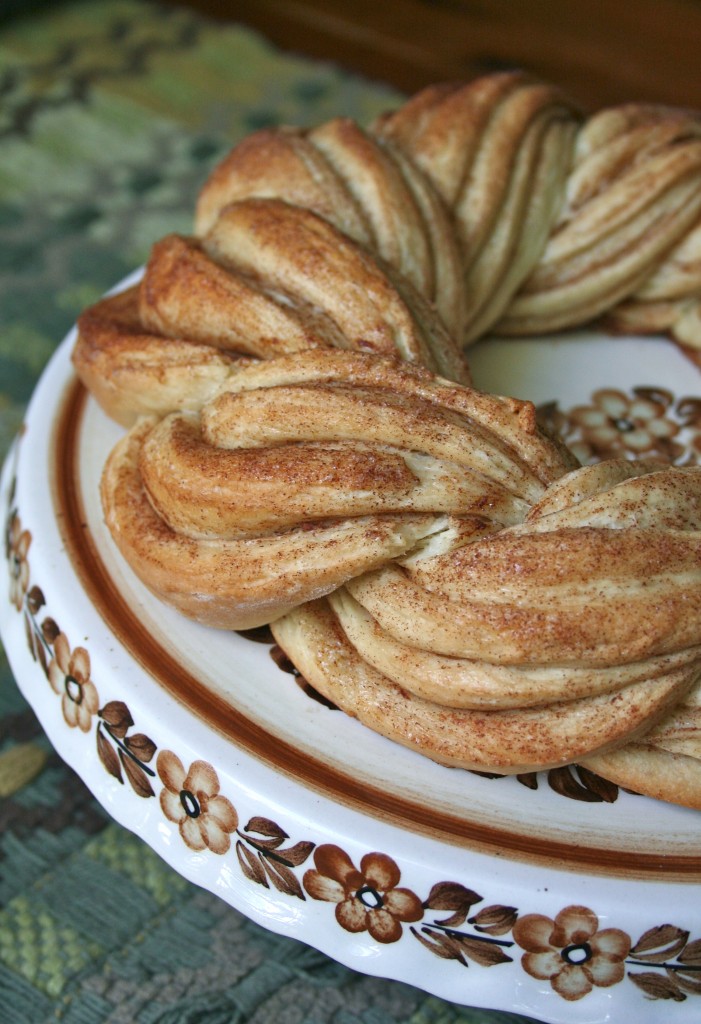
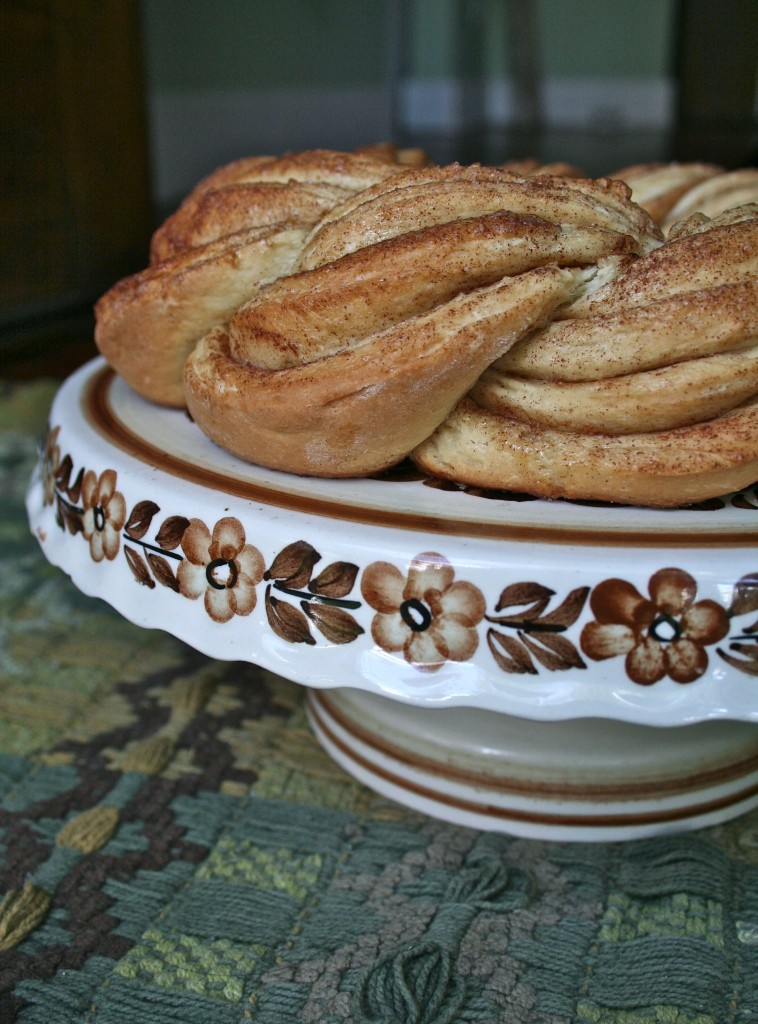
And they were good. Exactly what I needed. As was this cinnamon twist bread–a twisty, yeasty experiment that turned out beautiful and delicious.

I also bought flowers. Because who doesn’t like filling blank spaces with the gentle opening of pink buds? For four dollars, I filled two vases with roses, and all weekend, I marveled at their delicate and glorious deaths.

Espresso and flowers. Cinnamon and sleeping cats. These were the things that make up the quiet moments of my busy life. This week, I’m baking 200 cookies for a UT event and madly finishing two novels for my Tuesday and Wednesday classes.

No doubt, I’ll be drinking more cappacinos and treating myself with buttery and flakey pastries. I’m going to need a lot of both this semester.

This dough should be made the night before you’re ready to bake your twists. While it might seem a bit taxing, preparing the dough ahead of time makes for a much easier morning. I rolled out of bed at 6 am on Saturday and placed the dough on the counter while I returned to sleep for an additional hour. By 9:30, I had two beautiful cinnamon twists ready to share with my husband and friends.

This cinnamon twist bread is a special and different expression of the morning classics–cinnamon, sugar, butter, and yeast. It made everyone ooh and ahh (always good, right?) and left everyone eager for one more piece. In the recipe below, I’ve linked to a great pictorial tutorial that can help sort the following words into reality.

Cinnamon Twist Bread

6 1/4 cups (28 oz) all-purpose flour

1 Tbs kosher salt

6 Tbs granulated sugar

5 tsp instant yeast

2 cups + 2 Tbs lukewarm milk

1/2 cup melted butter (unsalted)

zest of 1/2 lemon

3 Tbs ground cinnamon

3/4 cup sugar

1/4 tsp ground nutmeg

up to 4 Tbs melted butter, for brushing

1. To make the dough, combine the flour, salt, and sugar in the bowl of stand mixer. Whisk the yeast into the milk until dissolved, then pour the mixture into the dry ingredients, along with the butter and lemon zest. Use the paddle attachment to mix the ingredients on the lowest speed for about 1 minutes, or until the dough starts to form a soft, shaggy ball.

2. Switch to the dough hook and mix on medium-low speed for about 4 minutes, adding more flour or milk as needed to create a smooth, soft, slightly sticky ball of dough. Increase the speed to medium and mix for an additional 2 minutes, or until the dough is very soft, supple, and tacky, but not sticky.

3. Transfer the dough to a lightly floured surface and knead for about 1 minute, then form it into a ball. Place the dough in a large, lightly oiled bowl, cover tightly with plastic wrap, and refrigerate overnight or up to 4 days.

4. On baking day, remove the dough from the refrigerator about 3 hours before you plan to bake. Divide the dough in half and form each half into a ball. Cover with plastic wrap or a lint-free kitchen towel, and allow to rest for about 20 minutes.

5. On a well floured counter, roll each ball of dough into a 12 x 15 inch rectangle. To form a rectangle, roll from the center to the corners, then out to the sides. If the dough starts to resist or is shrinking back, let it rest for 1 minute then continue rolling. The dough should be between 1/4 and 1/2-inch thick.

6. Make the cinnamon-sugar mixture by whisking the cinnamon and nutmeg into the sugar. Brush the surface of the dough with the melted butter over the dough, and sprinkle the cinnamon-sugar over the surface, leaving a 1/4-inch border. Roll up the dough like a rug, rolling from the long-side of the rectangle to form a tight log.

7. Using a sharp knife, cut  down the length of the log so that it splays open, showing the many layers within. Place halves side by side, with cut surfaces facing up. Moisten one end of each portion with wet fingers. Push the ends together to join the two pieces of dough. Braid pieces together. Shape into a ring and fit into a greased 8 or 9-inch pan. Brush with additional melted butter and sprinkle with cinnamon and sugar.

8. Bake Cinnamon Twist Bread  in a preheated 350 F oven for 25-35 minutes. Allow to cool for 20 minutes before serving.

Monet

Anecdotes and Apple Cores